Spatio-temporal data Analysis and Reasoning (STAR)

GROUP AIM

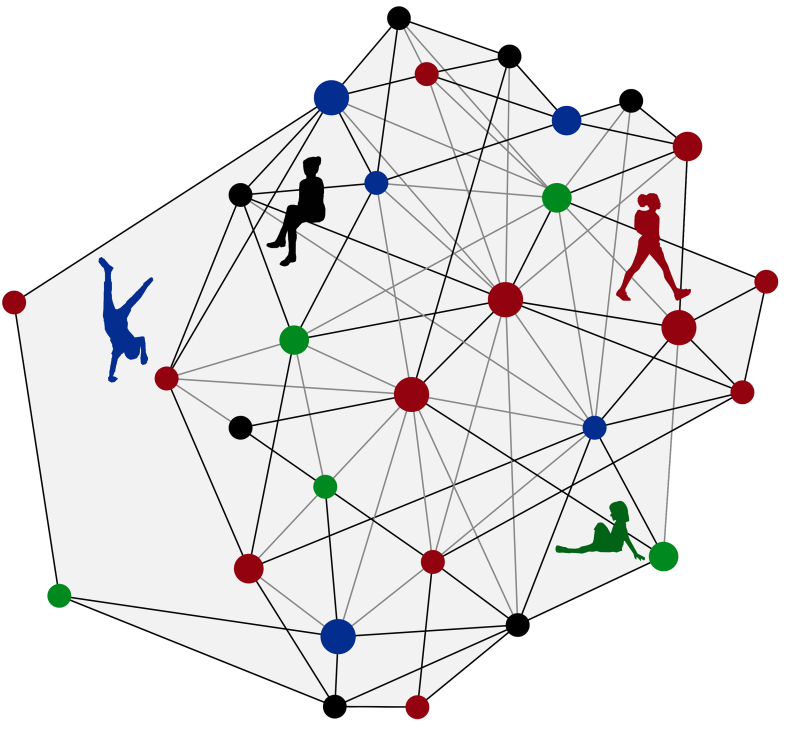
Our research group is part of the Automated Design of Algorithms (ADA) group embedded in the Leiden Institute of Advanced Computer Science (LIACS) at Leiden University. We aim to design algorithms for effectively processing spatial, time-series and spatio-temporal data. In principle, every process around us is spatio-temporal, as we can attach time and space to it. Spatio-temporal datasets represent the development of these processes by sampling them in time and space. Modern sensing technologies such as Earth Observation satellites, GPS, and wearable sensors have made it possible to collect such datasets at large scales. We explore the design of algorithms that can automatically handle all necessary data processing tasks from the point of data collection to high-level modelling, extraction of information, and effective decision-making from such data. Our research targets complex applications in a broad range of urban, environmental, and industrial domains. We strongly focus on developing algorithms for wearable data, Earth observations, and open spatio-temporal data sources. Find out more about our new initiative AutoAI4EO, where we advance machine learning algorithms for Earth observations.

RESEARCH

A screenshot of the portfolio page

Since 2018

Earth observations
The AutoAI4EO initiative encompasses a group of projects in collaboration with ESA and SRON focused on advancing AI for Earth Observation. Our research is financed by NWO, ESA, SRON, and the EU. Find more information here.
A screenshot of the portfolio page

Since 2011

Trajectory data
Spatio-temporal trajectories show the movement of moving objects (e.g., humans, cars, animals) over space. We design algorithms that can extract patterns from such data. Human trajectory data can be used to unravel information about social dynamics and space usage. Within an earlier project funded by the Center for BOLD Cities, we looked at trajectories of pupils playing in playgrounds. In a newly funded project by NWO, we are taking a step further by connecting such information with features of the built environment and physiological indicators. By doing so, individual differences in the subjective experience of loneliness are linked to the context in which they arise, enabling the identification and testing of intervention strategies.

Since 2023

Wearables data
Within the LABDA (Learning Network for Advanced Behavioural Data Analysis) EU project, we would like to understand how 24/7 observational activity data collected by wearable sensors (e.g., smart watches) can be used to identify and recommend effective changes in daily activities (i.e., possible behavioural interventions) that are expected to result in concrete health improvements.
A screenshot of the portfolio page

Since 2022

Astronomical observations
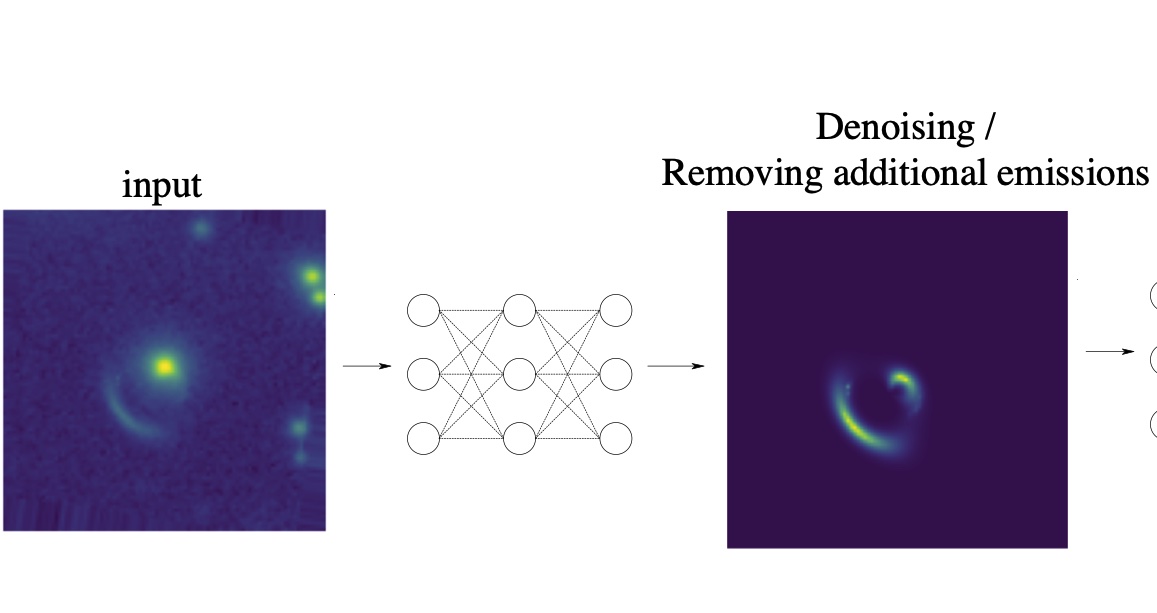
We study how machine learning algorithms developed for data acquired from telescopes can help us understand the world better. To this end, we collaborate closely with astronomers in the Leiden Observatory.
A screenshot of the portfolio page

Since 2017

Urban data
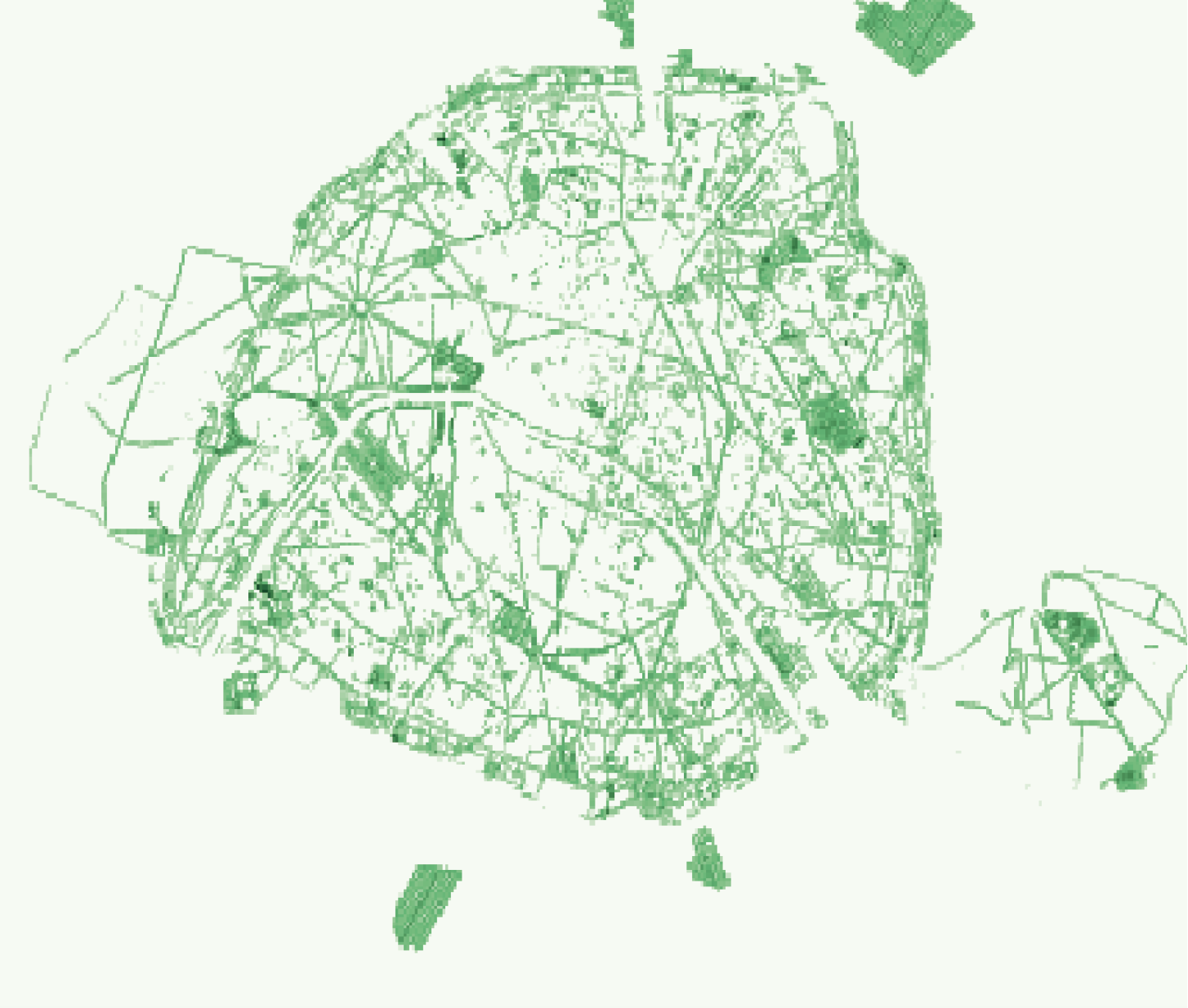
We would like to know how open and ubiquitous data sources can help find computational solutions for urban challenges. Within the master's course Urban Computing, we cover methods for processing spatio-temporal data. Students complete course projects that address urban problems using computational methods. Notably, in 2019, three of our projects made it up to the top 10 selected contributions in the Future Cities Challenge.
A screenshot of the portfolio page

Since 2018

Time series
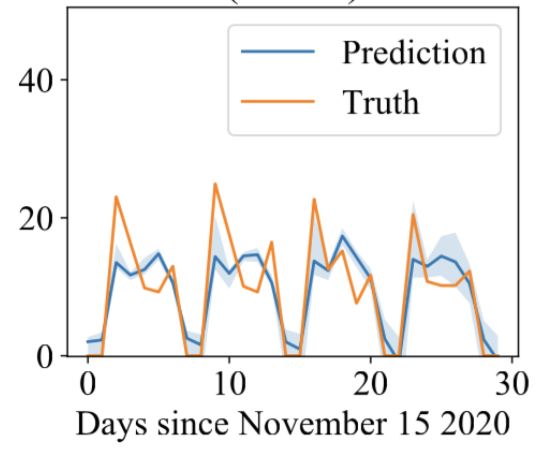
Time series data are observations of a single process at regular time intervals. We have previously designed different algorithms for time series data for different applications (e.g., energy load forecasting, remaining useful life estimation, and COVID-19 forecasting).

NEWS

Aug 3, 2026

New publication
Julia Wąsala has a paper accepted to the Data-Centric Machine Learning Journal.

Jul 21, 2026

New publication
Julia Wąsala has a paper accepted to the Discovery Science Conference.

Jun 23, 2026

PhD defence
Laurens Arp successfully defended his thesis titled The State of the Earth: Estimating Physical Parameters from Noisy and Incomplete Earth Observation Data.

Feb 10, 2026

New publication
Laurens Arp has a paper accepted in the European Journal of Remote Sensing.

Feb 10, 2026

Online news article
Bram van Eerden's work has been published in H2O media.

Jan 15, 2026

New visitor
Jurairat Preechasin is visiting the STAR Research Group from 15 January to 15 April 2026.

Jan 10, 2026

PhD thesis submitted
Laurens Arp's PhD thesis has been submitted to the committee!

RECENT PUBLICATIONS

[All Publications]
  1. Characterising the ill-posedness of PROSAIL inversion for biophysical parameter retrieval
    Laurens Arp, Peter M. Bodegom, Holger H. Hoos, and Mitra Baratchi
    European Journal of Remote Sensing, vol. 59, pp. 2632518, 2026
  2. Neural architecture and hyperparameter selection through meta-learning on time series
    Erfan Moeini, Christopher Vox, Marie Anastacio, Wadie Skaf, Mitra Baratchi, and Holger H Hoos
    In Proceedings of the AAAI Conference on Artificial Intelligence, vol. 40, pp. 24405–24413, 2026
  3. Standardised synchronisation and validation pipeline for physiological biomarkers across multiple devices
    Selin Acan, Clàudia Valenzuela-Pascual, Filippo Corponi, Bryan M Li, Diego Hidalgo-Mazzei, Dick Thijssen, Gideon Vos, Stefan Bogaerts, Erno Hermans, Mitra Baratchi, and others
    Behavior Research Methods, vol. 58, pp. 239, 2026

CONTACT

Address: Einsteinweg 55, 2333 CC Leiden, The Netherlands
Email: m.baratchi[at]liacs.leidenuniv.nl